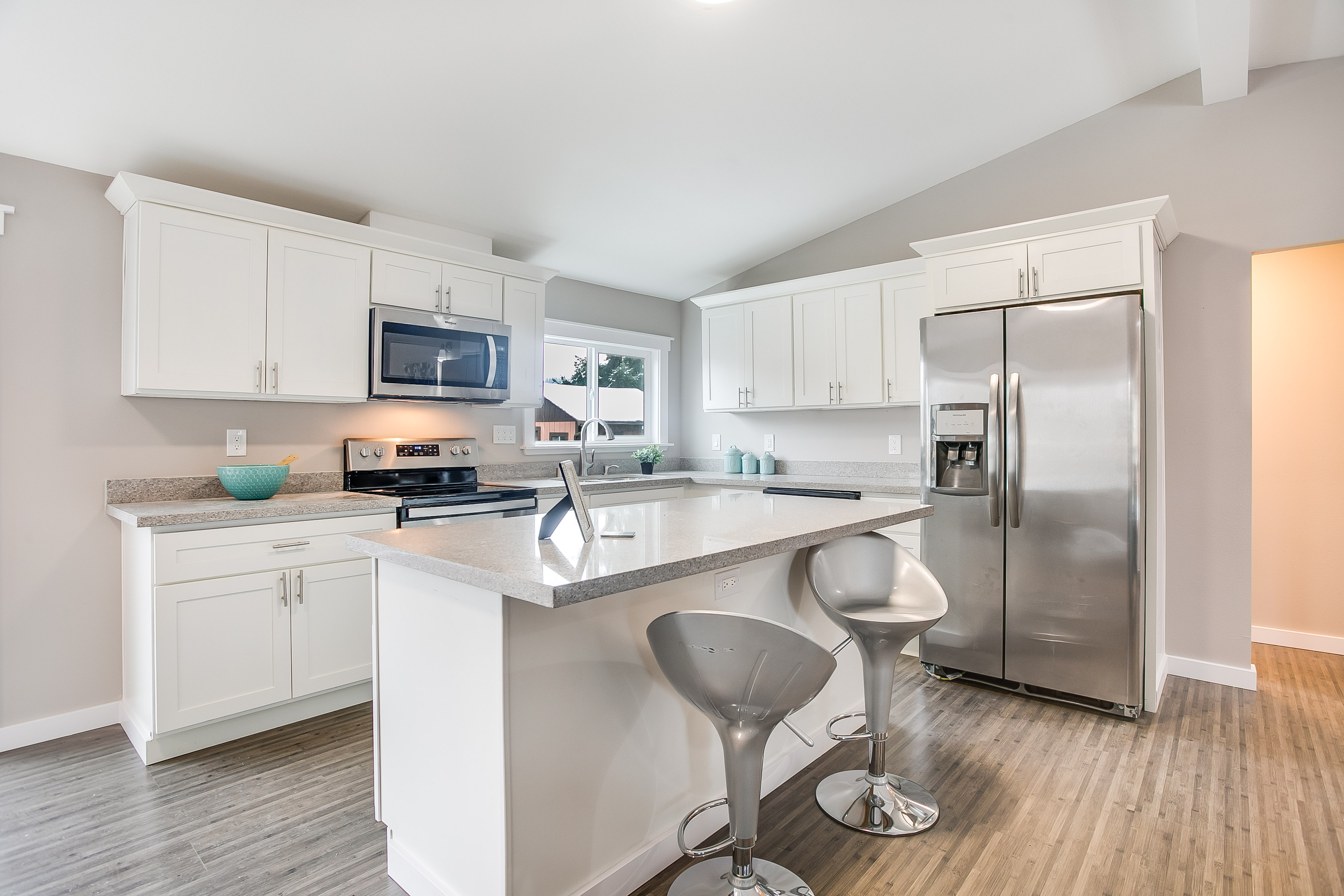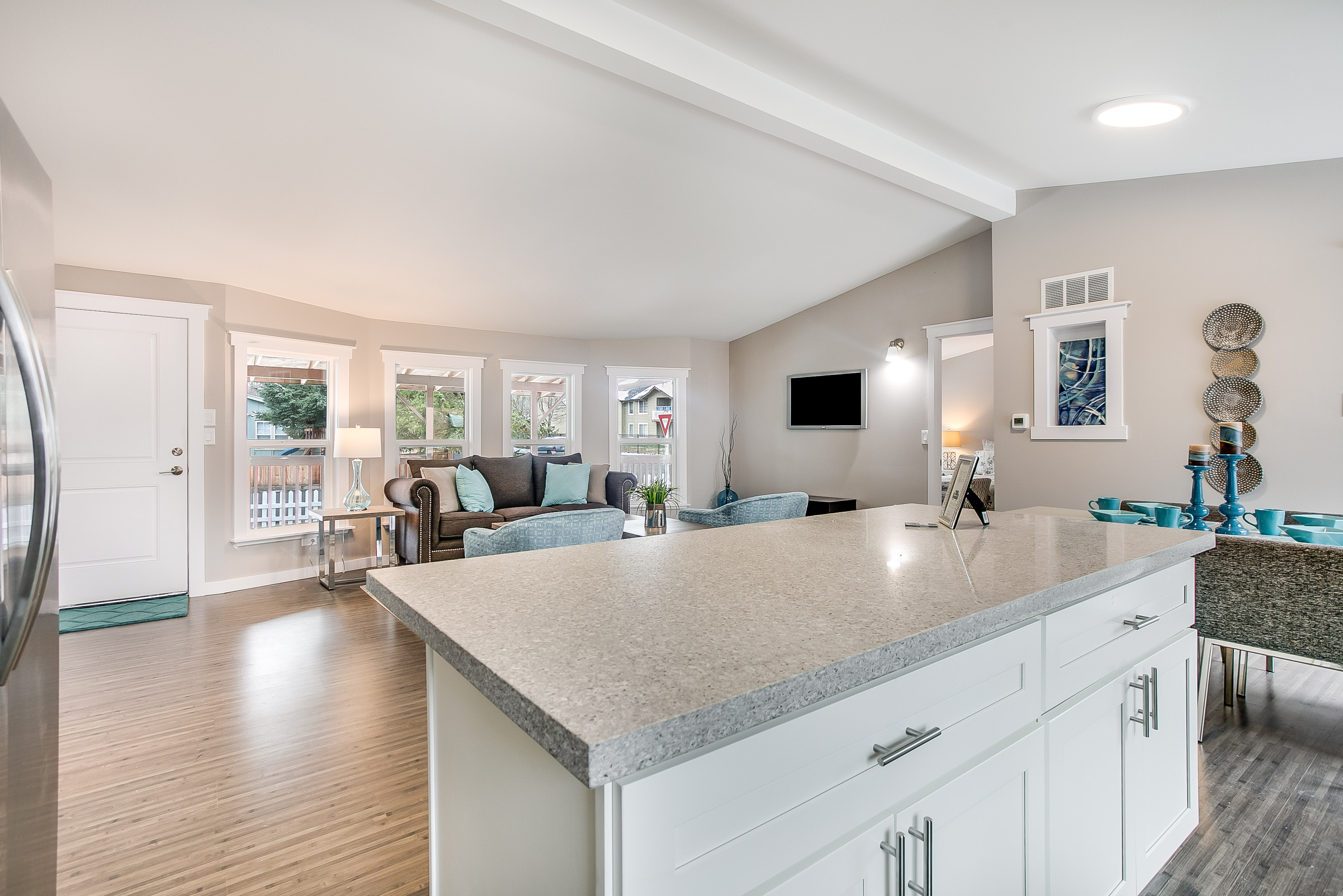
A kitchen remodel brings people, decisions and disruption into your home. A finished-project photo can show you the look you want. Choosing the company that will get you there takes a different kind of homework.
Start by verifying the contractor's Washington registration, talking to relevant past clients and comparing detailed written proposals. Then ask how the company handles decisions, delays, unexpected conditions and mistakes. Those answers give you something concrete to evaluate before you sign.
For homeowners in Gig Harbor, Tacoma, Bonney Lake, Covington and Federal Way, here is a practical way to approach that decision.
The standard we use when building a scope
At MyGCNow Construction, our starting point is to separate what we know, what we are assuming and what still needs to be checked. A preliminary budget helps set direction. A final scope and investment needs to define the work much more clearly.
We want to understand what bothers you, what already works and which changes matter most. That conversation helps us consider sensible options, including keeping useful components or phasing appropriate work when the requested scope and budget need to be aligned.
1. Verify the business you would actually hire
Ask for the company's exact legal business name and contractor registration number. Match those details to the company named in your proposal and contract.
Use Washington Labor & Industries' Verify a Contractor, Tradesperson or Business tool to review registration, bond and insurance information, applicable workers' compensation coverage, and available citation or bond-lawsuit records. Ask who will perform electrical and plumbing work, and verify the relevant credentials for those businesses and tradespeople too.
These records establish an important starting point. Your next step is evaluating how that company plans and manages work like yours.
Source: Washington L&I's guide to using the Verify tool.
2. Ask references about the part the photos cannot show
Request references for kitchens with a similar scope. Replacing countertops while keeping cabinets is a different assignment from moving walls, relocating plumbing and replacing the entire kitchen.
With the homeowner's permission, ask about the working relationship:
Who communicated with you during construction?
How did you find out about delays or additional costs?
What happened when something needed to be corrected?
Was the home protected and cleaned as agreed?
Would you hire the company again for a project this size?
A useful follow-up is: "What do you wish you had clarified before signing?"
Read reviews for specific descriptions of communication, follow-through and problem resolution. A star rating gives you a starting point; a relevant conversation can tell you much more.
3. Compare the work behind the price
Ask each contractor to price the same intended scope, then review the differences together. A lower total may reflect a more efficient approach, different products or work that has been left out. A higher total also needs an explanation.
For a kitchen, look for clear descriptions of:
Protection, demolition and debris removal.
Cabinets, hardware and installation.
Countertop fabrication, cutouts, edge details and installation.
Backsplash coverage, wall preparation and finishing.
Plumbing and electrical work.
Appliance delivery, installation and connections.
Flooring, transitions, trim, drywall and painting.
Permit responsibilities, inspections, taxes and exclusions.
Here is an illustrative comparison, rather than a quote from a particular project: one proposal says "install new countertops." Another identifies the countertop material and edge, removal of the existing surface, sink cutout, plumbing disconnection and reconnection, and related wall repairs.
Those descriptions may lead to different totals. Ask what each includes before deciding which offers better value.
Start with our kitchen and bathroom remodeling planning guide if your scope is still taking shape.
4. Understand allowances before choosing finishes
An allowance is a budget placeholder for an item that has not been fully selected. It needs enough detail for you to understand what it buys.
Ask whether each allowance includes materials, labor, tax, delivery and any applicable markup. Ask how an overage or unused amount will be handled.
For example, a cabinet allowance needs to connect to the planned cabinet count, layout and product level. Countertop pricing may depend on the selected slab, fabrication requirements, backsplash coverage and whether the design includes waterfall ends.
A useful question is: "Can you show me examples that fit this allowance?"
That turns a number on the proposal into a choice you can evaluate. As selections become final, ask for an updated total before authorizing orders or changes.
5. Find out who will manage your kitchen after the sale
Ask who handles the project once construction begins. The person who prepares the estimate may hand the work to a project manager or site supervisor.
A useful handoff explains who owns the schedule, who answers jobsite questions, where decisions are recorded and how concerns are escalated. Ask how often you should expect updates and what happens if your main contact is unavailable.
At MyGCNow Construction, our production handoff identifies the project manager, and JobTread is our preferred place for project communication. The estimating associate can stay involved, while the homeowner has a clear production contact for scheduling and execution questions. Keeping decisions and updates with the job gives everyone a shared record.
Whichever contractor you choose, agree on a communication process you can both use consistently.
6. Ask what must happen before demolition starts
Ask the contractor to explain the sequence behind the proposed start date.
Which measurements, design decisions, material orders, trade arrangements and permit steps need to be resolved? Which products should be on hand, and which can arrive later without interrupting the work?
For the time your kitchen is unavailable, discuss access, dust protection, pets, working hours and any temporary setup you will need.
Permit requirements depend on the work and the authority responsible for your property. Ask who will confirm requirements, obtain permits, arrange inspections and include those costs in the proposal. Washington L&I advises homeowners to clarify permits and inspections as part of hiring a contractor.
Source: Washington L&I's Hire Smart guide.
7. Agree on how changes, payments and corrections will work
Before signing, ask the contractor to walk you through an example of a change.
Suppose demolition exposes damaged subflooring near the sink. How will the condition be documented? Who will explain the repair options? How will you see the price and schedule effect, and how will approval be recorded before additional work proceeds?
In our process, a change needs a written record of the agreed work, price and schedule effect before additional change-order work proceeds. A conversation starts the discussion; the project record needs to show the decision.
Discuss payment terms with the same level of detail. Understand what a deposit or material payment covers, when later invoices become due and how credits or cancellations are handled. Avoid paying the entire project price before the work is complete.
L&I's Disclosure Statement Notice to Customers also explains that a contractor's bond may be insufficient to cover a claim and that unpaid subcontractors or suppliers may create lien exposure. Ask about the notice and the process for appropriate lien releases.
Finally, ask how incomplete or unsatisfactory work is recorded, who arranges corrections and how to request warranty service. Get the warranty terms and exclusions in writing.
Finish expectations deserve the same clarity. For example, when matching existing drywall texture, our scope describes the target as "as close as practical" and identifies the related repair and finishing work. A defined expectation gives the homeowner and contractor something useful to review together.
8. Look for advice that makes the scope fit your goals
One of the most useful questions you can ask is: "What would you keep, and what would you change, given my priorities?"
If your existing layout works, ask what a refresh could accomplish. If the cabinet boxes are sound, ask about their condition and limitations before assuming replacement is necessary. If an island or wall needs to move, ask what additional work that decision triggers.
Good advice makes the tradeoffs visible. Keeping an existing feature may reduce the scope, but it can also limit the finished design. Replacing it should have a clear reason tied to condition, function or the result you want.
Give yourself time to consider those choices. A contractor should be able to explain the proposal and answer reasonable questions before asking you to commit.
Warning signs that deserve a closer look
Pause when credentials cannot be verified, written details remain vague, or a contractor pressures you to sign immediately. An unexplained price difference, unclear payment request or refusal to discuss permit responsibilities also deserves a direct question.
One missed call or an honest delay does not tell you the whole story. Look at the pattern: does the company explain the issue, agree on the next step and follow through?
The same standard should apply to MyGCNow Construction. Ask us to explain the scope, allowances, communication process and next steps clearly.
Your checklist before you sign
You should be able to explain:
Which legal business you are hiring and how you verified its credentials.
What work, materials and related costs are included.
Which selections, allowances and exclusions remain open.
Who manages the job and where decisions will be recorded.
What the start date depends on and how disruption will be managed.
How changes, payments, corrections and warranty requests will be handled.
If an answer is unclear, ask for it to be clarified in writing.
Planning your kitchen remodel?
MyGCNow Construction is based in Gig Harbor and serves Pierce County and South King County. Bring current kitchen photos, your main frustrations, what you want to keep, a working budget and your timing goals.
Book a free preliminary consultation to discuss your kitchen and the next step, or explore our kitchen remodeling services.
Call 253-237-7709.
WA Contractor Registration: MYGCNC*754P3